Arrow Down Name on Piece of Paper Clip Art
Lesson 1: The PowerPoint Window
Introduction
Microsoft PowerPoint XP, part of the Role XP suite, is a presentation graphics application. A presentation is a combination of slides, handouts, notes, and outlines all in one file. You tin can add text, graphics, photos, clip art, sound, and video to your slides. PowerPoint 2002 can help you present a topic at work, home, or school.
By the cease of this lesson, you should be able to:
- Identify the parts of the PowerPoint window
- Recognize the slide views
- Operate the job pane
- Operate the drop-down menus
The parts of the PowerPoint window
The PowerPoint window has toolbars and panes to assistance you quickly create presentations. Most of the toolbars are common in Office applications only may characteristic options unique to PowerPoint.
- Title bar: Displays the document name followed past a plan name
- Carte du jour bar: Contains a list of options to manage and customize documents
- Standard toolbar: Contains shortcut buttons for the most pop commands
- Formatting toolbar: Contains buttons used for formatting
- Condition bar: Displays slide position and the type of blueprint in PowerPoint
- Cartoon toolbar: Contains tools for cartoon lines, shapes, and objects
- Help: Provides quick access to help topics
PowerPoint XP has a new default Normal view chosen the Tri-pane view. This view, which opens when yous launch PowerPoint, allows you to see multiple parts of a presentation at one time.
I of the other noticeable changes betwixt PowerPoint 2000 and PowerPoint 2002 is the task pane. Located on the right side of the computer screen, this pane allows y'all to select tasks in different categories and lets you speedily enhance your slides in a few steps. Yous'll learn more than about the task pane later in this lesson.
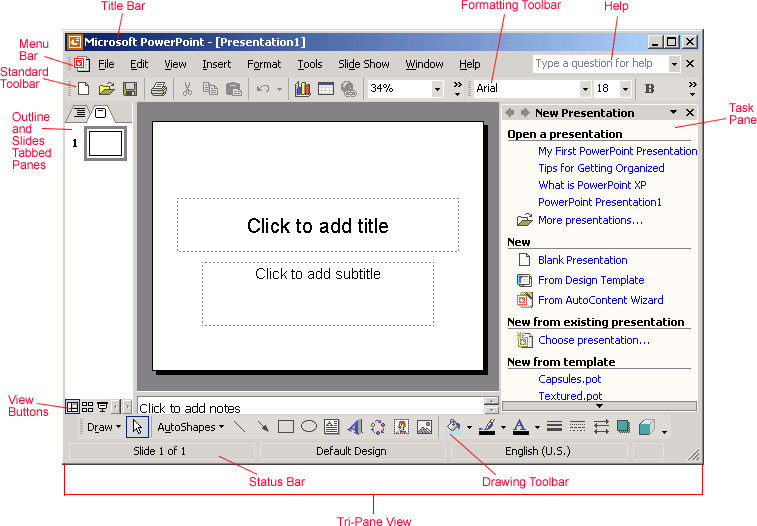
Also new in PowerPoint 2002 are the Outline and Slides tabbed panes. Click the tabs on the left side of the screen to view an outline or slide of your presentation. The tabs render differently based on the size of the pane.


 You tin evidence or hibernate PowerPoint'southward toolbars. Click the View bill of fare and cull Toolbar. Determine which ones you want to show or hide.
View buttons and slide views
The view buttons at the bottom-left corner of the screen allow for three slide views: Normal view, Slide Sorter view, and Slide Show view.

The view buttons can be useful every bit you lot prepare your presentation. They control the way slides are displayed on the screen. Click a view button to see a different view.
Normal view  contains the Outline and Slides tabbed panes on the left, the Slide pane in the heart, and the task pane on the right.
Outline view shows the text of your presentation for piece of cake editing, while Slides view shows text and graphics of the slide you're working on. Click the tabs to switch between the two views. Nether the center slide area is a place for notes.
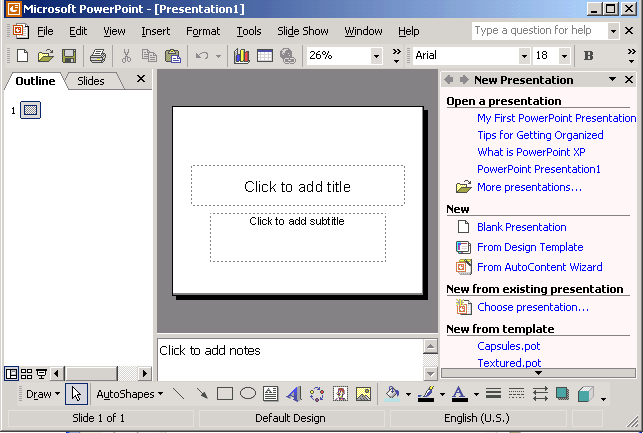
You lot can hide or show the different panes in Normal view. To hide the task pane, click the View carte du jour and choose Task Pane. (The View menu also allows you to choose other views). To hide the Outline and Slides tabbed panes, click the Ten to the left of the Slides tab.
More views
Hither are some other views that may be useful every bit yous create your presentations:
Slide Sorter view  lets yous run across pocket-sized versions of all the slides you have created. You can delete, copy, and move slides in this view.
Slide Bear witness view  lets you see your presentation electronically as it volition appear to an audience.
The job pane
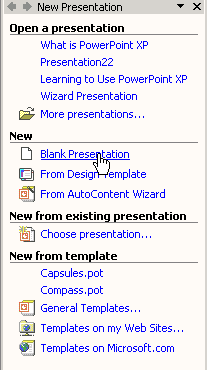
The PowerPoint XP chore pane replaces the dialog boxes used in PowerPoint 2000. The downward-pointing arrow in the top-right corner of the pane allows you to select different menus and tools. By default, the task pane appears when PowerPoint XP is launched.
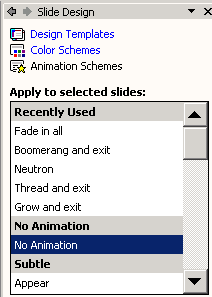
The Slide Layout and Slide Pattern panes within the chore pane help organize layouts, design templates, and color schemes. When yous select a design option, your slides are quickly updated with the new await.
Yous tin view the Slide Layout and Slide Design panes past clicking on the down-pointing arrow next to New Presentation in the job pane.

Select Slide Layout or Slide Pattern (Design Templates, Color Schemes, and Blitheness Schemes). You'll learn more about using these panes later in this class.
Using the job pane
If you do not see the task pane on the right side of the PowerPoint window, you tin easily access it.
To open up the task pane:
- Click View
 Task Pane.
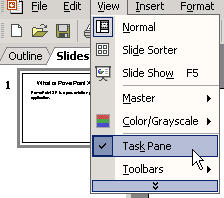
To view different panes:
- Click the downward-pointing arrow side by side to New Presentation and select different panes.
- In one case you open unlike panes, yous can motility through them past clicking the backward and forrard arrow buttons on the left.
To close the task pane:
- Click the X on the right corner of the bar.
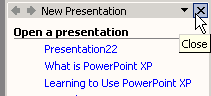
Y'all can hide or view the task pane past clicking View Task Pane.
Using drib-down menus
PowerPoint XP'south menu bar operates differently than the one in PowerPoint 2000. The menu initially displays commands you use well-nigh ofttimes. To view infrequently used commands, you utilize drop-downwardly menus.
To view commands in a driblet-downward menu:
- Click a carte du jour in the menu bar, such as File, Edit, View, or Insert.
- Motility your mouse pointer over the double arrows at the bottom of the drop-down carte.
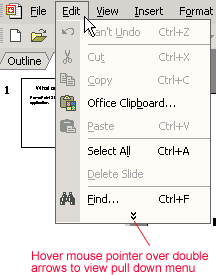
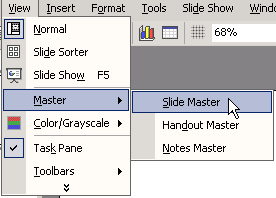
Notice that some menus have black arrows to the right. Slide yous mouse pointer over the arrow to view more options.
Challenge!
- Open PowerPoint from the Start carte.
- Review the parts of the PowerPoint window.
- Familiarize yourself with the task pane. Click to see the other panes.
- Click the bill of fare bar and view drop-downwardly menus.
- Click the view buttons.
- Click the Outline tab and the Slides tab.
/en/powerpointxp/creating-a-blank-presentation/content/
Source: https://edu.gcfglobal.org/en/powerpointxp/the-powerpoint-window/1/
0 Response to "Arrow Down Name on Piece of Paper Clip Art"
Enviar um comentário